
From Bedroom Videos to Media Empires: How Influencers Became Digital Businesses
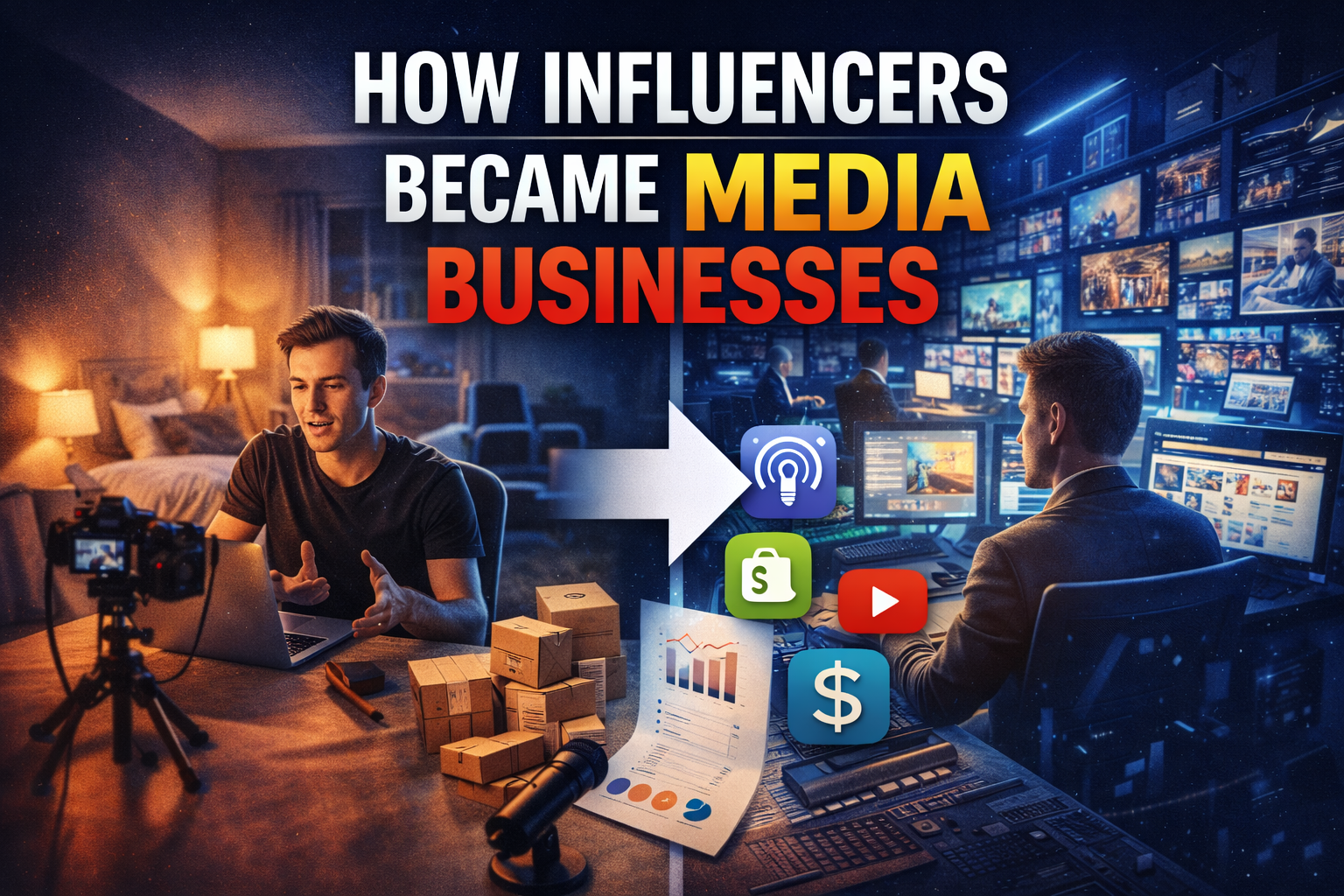
Influencers used to be simple.
A camera.
A room.
A personality.
Entertainment.
You posted content, people watched, and the “business” was basically:
get views → get followers → get brand deals.
That era is still alive, but it’s no longer the full picture.
Today, the top creators don’t operate like casual internet personalities.
They operate like media companies:
they run teams
they manage production pipelines
they distribute across multiple platforms
they sell products, subscriptions, communities, and services
they build brands that outlive any single platform algorithm
Influencers didn’t just become popular.
They became digital businesses.
1) The old model: “creator = content”
The earliest wave of influencers looked like this:
solo creator doing everything
a few uploads per week
growth driven by virality and consistency
monetization mostly through ads (YouTube) or brand deals (Instagram)
It was simple, direct, and personality-driven.
But it had a ceiling.
Because if your income depends mostly on:
platform ad payouts
sponsorships
reach controlled by algorithms
…you don’t really own your business.
You’re renting attention.
2) The shift: creators realized attention is an asset
At some point, creators learned a hard lesson:
views are not a business.
Views are fuel.
The business is what you build using that attention.
So creators started treating attention like an asset and doing what every smart business does:
diversify revenue
build owned audiences (email, SMS, communities)
create repeatable products
turn content into a funnel
That’s where “influencer” started becoming “company.”
3) Platforms matured: creation became easier, competition became brutal
As platforms evolved, the tools got better:
easy editing on phones
templates
AI captions
quick distribution
monetization programs
This lowered the barrier to entry.
But it also created massive competition.
When everyone can create, the advantage shifts from just “posting content” to:
brand positioning
distribution strategy
content systems
product strategy
In other words:
systems beat talent.
This is exactly how media companies win.
4) The modern influencer stack looks like a real media company
Most successful creators now operate with a structure that looks like this:
Content production (the “studio”)
filming setup + gear
scripts / outlines
editing workflow
thumbnails / hooks
content calendar
Distribution (multi-platform)
YouTube long form
Shorts / Reels / TikTok
X / Threads for daily awareness
newsletters for retention
podcasts for depth
Monetization (multiple lines)
sponsorships + partnerships
ads (YouTube + podcast)
affiliate revenue
digital products (courses, templates, guides)
physical products (merch, supplements, consumer brands)
memberships (Patreon, paid Discord)
services (consulting, coaching, agencies)
events and live experiences
Business operations (like a company)
brand manager
editor(s)
assistant
sponsorship manager
community manager
accountant/legal
hiring contractors
That’s not “influencer life.”
That’s a business.
5) Why creators are building “owned channels” like a real brand
Platforms are powerful but unpredictable.
Algorithms change.
RPMs drop.
Reach fluctuates.
Accounts get demonetized.
So creators increasingly build owned channels:
email lists (direct communication)
communities (Discord, Circle, Skool)
websites (blogs + landing pages)
products (repeatable revenue)
brands (recognizable identity)
A creator with:
a strong brand
owned distribution
products
…is much harder to kill with an algorithm update.
That’s a real business moat.
6) The “influencer” label is outdated — it’s closer to a startup now
A modern creator often looks like a startup with distribution already solved:
they have attention
they can test ideas fast
they can launch products instantly
they get feedback in real time
they can build a brand without traditional advertising
That’s why creators are starting:
software products
DTC brands
newsletters that rival publishers
media networks
agencies
investment funds
They don’t just “influence.”
They own distribution.
And distribution is the hardest part of business.
7) The next evolution: creators as networks, not individuals
We’re already seeing the next stage:
creator-led media groups
multi-host channels
spin-off shows
creator “studios” that produce content for other creators
incubators and partnerships
The same way traditional media companies scale.
Because the logic is the same:
one person has a ceiling
a system + team can scale
The core idea: influencers became media businesses by treating content like infrastructure
The big change is this:
Old creator mindset:
“I make content.”
New creator mindset:
“I run a media business that uses content to drive revenue.”
Entertainment is still the entry point.
But behind the scenes, the best creators now run:
production systems
brand systems
distribution systems
monetization systems
Which is exactly what media companies do.