
EU Inc: Ursula von der Leyen’s “28th Regime” Could Finally Make Europe Feel Like One Startup Market
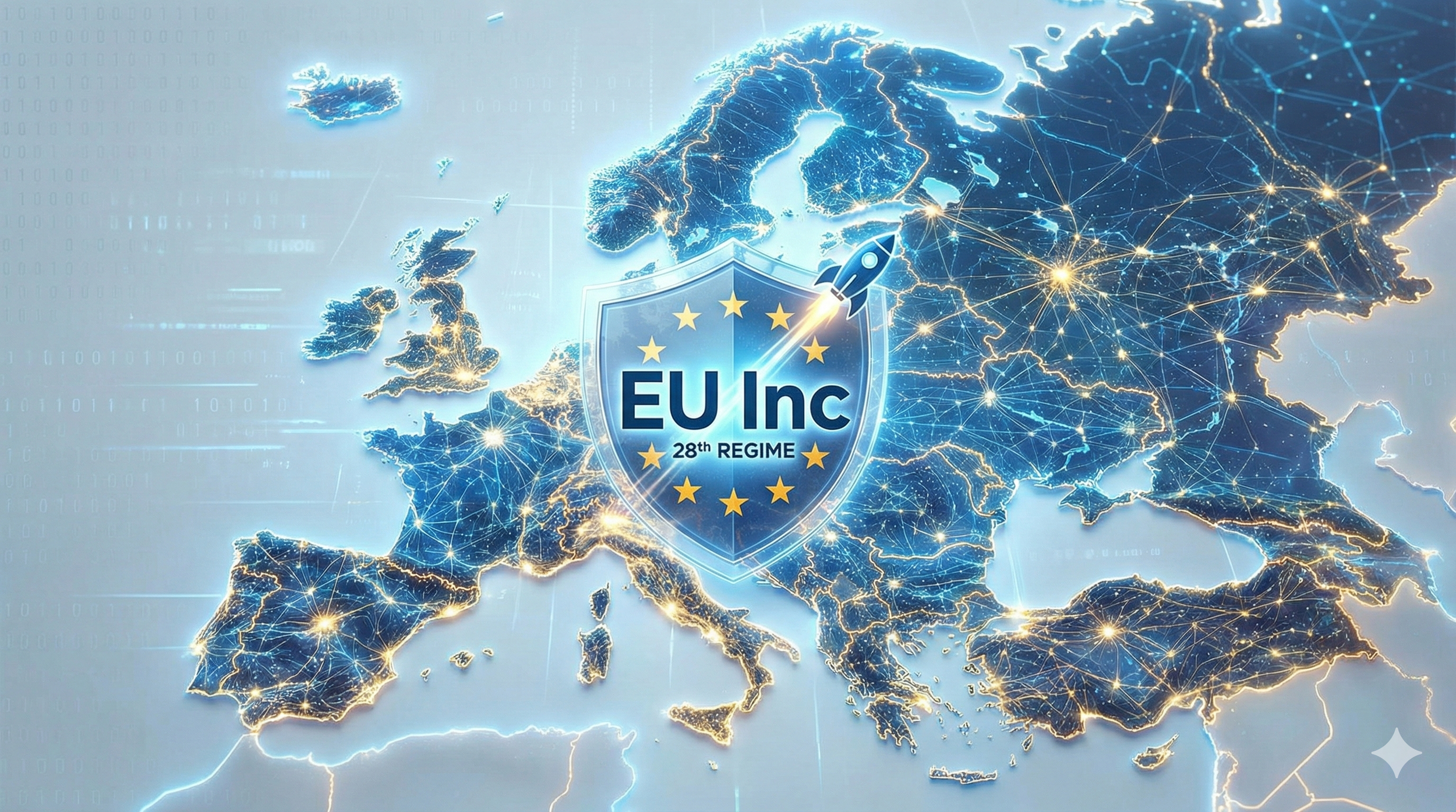
A recurring complaint from European founders is painfully simple: Europe is a single market in theory, but not in company-building reality. The moment you expand across borders, you often hit a new stack of rules—company law, registration processes, financing mechanics, compliance norms—repeated 27 times.
At Davos, European Commission President Ursula von der Leyen put a name on the fix: EU Inc—a “truly European company structure” that would sit above national fragmentation via a so-called “28th regime.” (European Commission)
The big headline that spread fast online: online incorporation in 48 hours, across the EU, with a single rulebook. Von der Leyen explicitly referenced that speed and “fully online” registration as part of the pitch. (European Commission)
What matters now is separating (1) what was actually said and already in motion, from (2) what supporters hope the final legal package will include.
What Ursula von der Leyen actually announced (and what “EU Inc” means)
In her World Economic Forum address, von der Leyen framed the problem like this:
capital and data move instantly across Europe
businesses still can’t move or scale as freely
expanding across Member States often means facing a new rule-set each time
Her proposed answer: a “single and simple set of rules” that applies seamlessly across the Union—the 28th regime—with the “ultimate aim” being a new company structure called EU Inc. (European Commission)
In practical terms, EU Inc is not (currently) “one forced legal entity for everyone.” It’s being positioned as an optional EU-wide regime that would exist alongside national company forms—so founders can choose it when it fits. That “optional / alongside” framing is also how it’s described in ecosystem and policy coverage. (Tech.eu)
Why the EU is pushing this now
The EU has been turning “competitiveness” into a legislative priority, and startups are a central piece of that narrative:
The Commission’s EU Startup and Scaleup Strategy (May 2025) signaled the intention to develop this initiative and move toward easier scaling across the Union. (Research and innovation)
The European Parliament has been actively pushing the concept of a harmonised “28th regime” and wants the Commission to submit a proposal by Q1 2026. (European Parliament)
Reuters has been tracking the Commission’s direction since Davos 2025, describing the 28th regime as a unified framework spanning corporate law (and potentially insolvency, labour, taxation). (Reuters)
So the “EU Inc” moment you saw on X is best understood as a label and political commitment attached to an initiative that’s been building through 2025 and is now being pulled into a near-term legislative window. (European Commission)
The 48-hour incorporation claim: plausible goal, not finished reality
The “48 hours, fully online” line is not random internet hype—von der Leyen’s speech language and Commission documents around the strategy timeline point in that direction. (European Commission)
But whether it becomes real for founders depends on details that still have to be legislated and implemented, such as:
what exact company form EU Inc is (and how it’s recognised across registries)
which processes are truly harmonised vs. “harmonised on paper”
how identity verification, beneficial ownership, and business registers are standardised
This is exactly why Parliament and ecosystem groups keep focusing on the legal shape and enforceability of the eventual proposal. (Euractiv)
What’s still unknown (and where the real fights will happen)
1) Regulation vs directive (the “teeth” question)
One of the most important open questions: does the EU deliver EU Inc as a regulation (uniform, directly applicable) or a directive (implemented differently by each country)? Even pro-EU tech voices have warned that a directive risks recreating the same fragmentation EU Inc is meant to remove. (TechCrunch)
2) How far the “single rulebook” really goes
Reuters has described the 28th regime ambition as covering a wide stack (corporate law, insolvency, labour law, taxation). That’s massive—so expect negotiation, compromise, or modular rollout. (Reuters)
3) The founder pain points that matter most in practice
If EU Inc is going to feel like a true “European Delaware,” it has to handle issues founders and investors obsess over, such as:
predictable governance and shareholder rights
clean fundraising mechanics across borders
option pools / employee equity treatment
simple cross-border ownership changes
clear insolvency pathways
Policy discussions and analysis around the 28th regime repeatedly surface these themes as the core value proposition. (European Commission)
Reality-checking the viral X claim
“A single legal entity for all European founders… No more bureaucratic mess across European borders.”
Here’s the grounded version:
Single EU-wide option: yes, that’s the direction—an EU-level company structure (“EU Inc”) tied to the 28th regime. (European Commission)
For all founders (mandatory): no—everything points to an optional regime that coexists with national forms. (Tech.eu)
No more bureaucracy: it can reduce bureaucracy dramatically, but it won’t erase every cross-border friction instantly—especially where taxes, labour rules, and enforcement still involve national systems. (Reuters)
So: the tweet captures the ambition, but oversells finality.
Timeline: what happens next
The best public “shape of the roadmap” looks like this:
Commission proposal targeted for Q1 2026 (repeated in Parliament materials and ecosystem tracking). (European Parliament)
Negotiation and adoption through the EU legislative process (Parliament + Council). (European Parliament)
Implementation would likely follow after adoption; ecosystem roadmaps often point to 2027 as a realistic window for practical rollout. (EU–INC)
What founders should do right now (practical, non-legal advice)
Don’t pause your company formation plans waiting for EU Inc. This is still moving through policy and legislation. (European Parliament)
If you’re planning VC funding, keep prioritising what investors already understand—while watching EU Inc as a potential future “conversion target.”
If you operate across multiple EU countries, start documenting the friction:
how long registrations take
costs of local compliance
cross-border admin time
That evidence will help you decide whether EU Inc is worth adopting when available—and it’s exactly the kind of data policymakers respond to.
Follow the legal-shape debate closely (regulation vs directive). That single decision will heavily determine whether EU Inc becomes a real single-market breakthrough or a softer coordination layer. (TechCrunch)
Bottom line
EU Inc is one of the most founder-relevant EU initiatives in years because it targets the problem that quietly kills scale: legal fragmentation that compounds with every new market.
Von der Leyen has now put a clear brand (“EU Inc”) and a clear promise (speed + simplicity) on the table. (European Commission)
If the Commission delivers this as a strong, uniform regime—rather than a patchwork directive—it could materially change why so many European startups still feel they need to “leave Europe to scale.”