
What Browser Features Are Planned for 2026
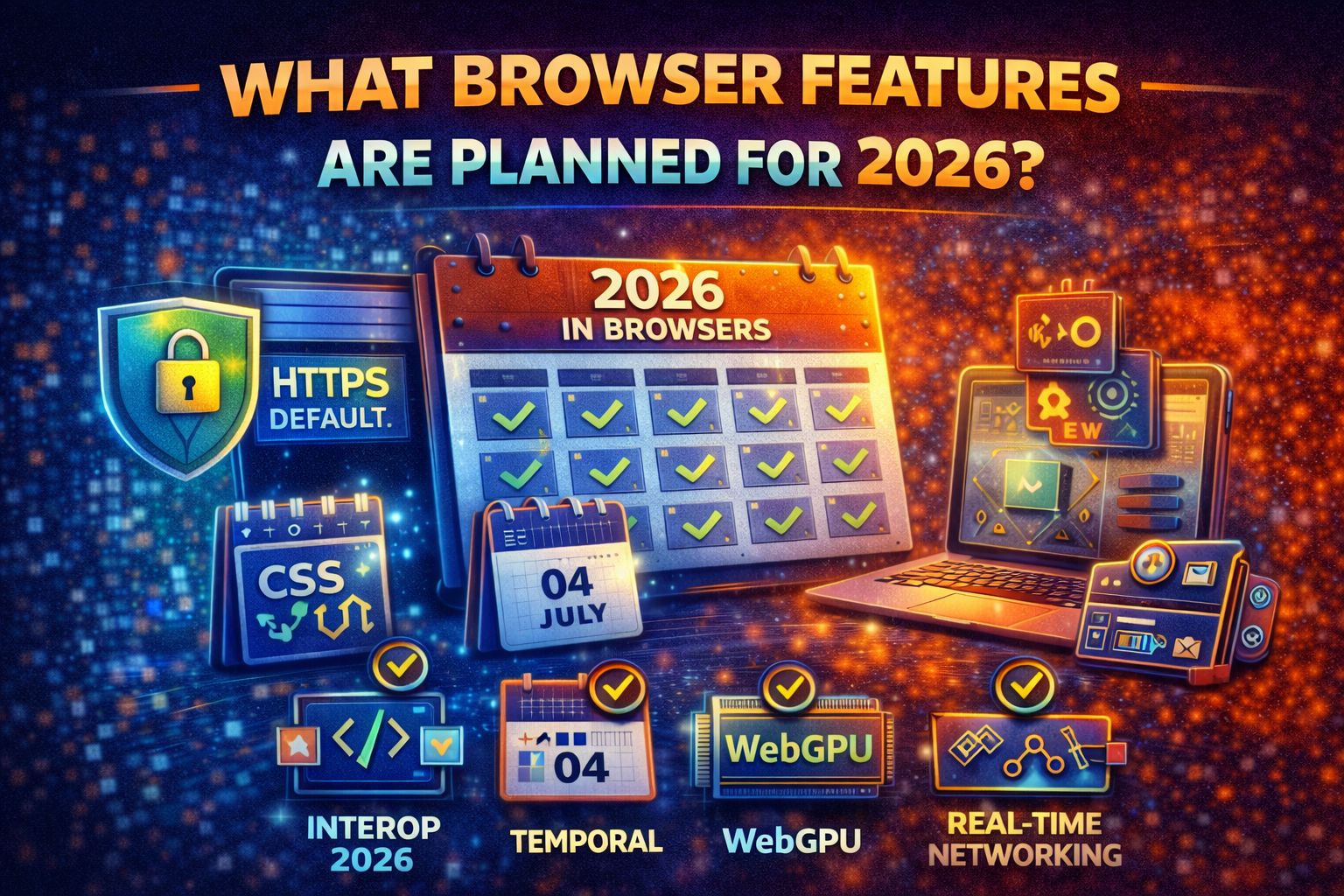
Browser roadmaps are always a moving target. Vendors ship behind flags, move timelines, and sometimes drop features entirely.
So when we say “planned for 2026,” what we really mean is:
features that are explicitly on vendor roadmaps, or
features that are being pushed through Interop 2026 (the annual cross-browser interoperability effort), or
changes with announced rollout dates in 2026
Here are the most credible “2026 bets” worth tracking as a web developer or SaaS builder.
1) Interop 2026: the biggest driver of “it finally works everywhere”
Interop is where browsers agree to prioritize a shared set of features and then measure progress with tests.
In late 2025, proposals for Interop 2026 opened, with the final list expected to be announced in early 2026.
What’s interesting is that the community reaction list already shows which proposals are getting serious attention, such as:
Temporal (modern date/time in JavaScript)
WebGPU API
Invoker API / command-based UI actions
CSS
calc-size()andinterpolate-sizeCSS
field-sizing(auto-growing inputs and textareas)VirtualKeyboard API
margin-trim
requestIdleCallback improvements
WebXR
Web Bluetooth and Web NFC
If Interop 2026 includes even a subset of these, it usually means fewer browser-specific hacks in 2026–2027.
2) HTTPS-by-default becomes the norm
One of the clearest planned browser changes for 2026 is stricter HTTPS behavior.
Browsers are moving toward:
upgrading HTTP navigation to HTTPS automatically
showing stronger warnings or blocking behavior for plain HTTP sites
What this means in practice:
public HTTP sites will feel increasingly broken
mixed-content issues will be less tolerated
HTTPS becomes even more non-optional than it already is
For businesses still running public sites on HTTP, 2026 is effectively the deadline.
3) WebGPU moves from “interesting” to “practical”
WebGPU already exists in production browsers, but 2026 is shaping up to be the year where it becomes consistent and predictable.
Signals pointing in that direction:
WebGPU is being discussed as a cross-browser interoperability focus
additional platform support (especially Linux) is expected
browser vendors are continuing to align APIs and behavior
Why this matters:
more realistic in-browser AI inference
advanced graphics and compute without native apps
fewer “works in one browser only” surprises
4) UI primitives continue replacing JavaScript-heavy components
A clear browser trend is reducing the amount of JavaScript needed for common UI patterns.
This includes:
auto-growing form fields
declarative commands to open dialogs and popovers
better native popover and dialog behavior
layout-aware positioning without custom JS
In 2026, expect:
fewer custom dropdown and popover libraries
more UI built directly with HTML and CSS
better accessibility by default
5) JavaScript Temporal finally becomes usable at scale
Temporal is the long-awaited modern replacement for JavaScript’s date handling.
It continues to receive strong attention in platform roadmaps and interoperability discussions.
If Temporal lands broadly in 2026:
date/time bugs drop dramatically
time zones become sane to work with
many apps can remove heavy date libraries
This matters especially for scheduling, analytics, finance, and productivity apps.
6) Real-time web APIs keep evolving
Browsers are continuing work on modern real-time networking primitives.
This includes APIs designed for:
low-latency communication
real-time collaboration
streaming data
multiplayer and live dashboards
These improvements push the web closer to native-app territory for collaborative and live experiences.
7) Device and XR APIs may improve — with caveats
Some device-focused APIs are being discussed for broader alignment:
WebXR
VirtualKeyboard API
Bluetooth and NFC APIs
The realistic expectation:
standards and tests improve
but availability still depends heavily on OS, permissions, and vendor policies
Developers should expect progress, not universal availability.
What this means for web developers in 2026
If you build websites or SaaS apps, the direction is clear:
Security defaults get stricter — HTTPS is mandatory in practice
Interop 2026 will reduce cross-browser pain for high-value features
More UI can be built natively, with less JavaScript
The web keeps moving toward app-level capabilities
This isn’t about one killer API — it’s about fewer hacks and more confidence shipping modern features.
Bottom line
Browser features planned for 2026 point toward a web that is:
more secure by default
more interoperable across browsers
less dependent on JavaScript for UI basics
capable of heavier workloads (graphics, compute, real-time)
For businesses and developers, that means better experiences with less custom code — and fewer reasons to abandon the web for native platforms.